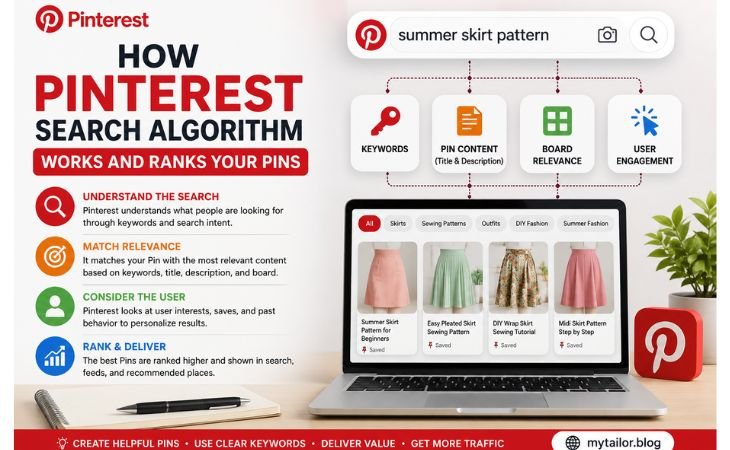
How Pinterest Search Algorithm Works is important to understand if you want more people to discover your Pins.
Pinterest is not only a place for beautiful images.
People use it to search for ideas.
They look for recipes. Fashion ideas. Tutorials. Products. Business tips. Home inspiration. And solutions to everyday problems.
Pinterest tries to show useful Pins for each search.
Your job is to make your content easy for Pinterest to understand.
Once you understand this process you can create Pins with a clear purpose instead of simply publishing and hoping for traffic.
How Pinterest Search Algorithm Works
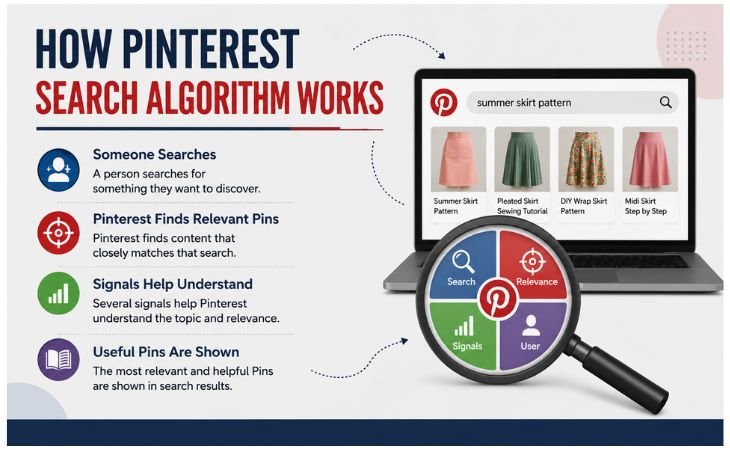
How Pinterest Search Algorithm Works becomes easier to understand when you think of Pinterest as a visual search platform.
A person searches for something they want to discover.
Pinterest then tries to find content that closely fits that search.
Several signals can help Pinterest understand the subject and relevance of a Pin.
Pinterest Understands the Topic
Pinterest needs information about what your Pin represents.
Your Pin title gives context.
Your description provides more details.
Your visual also communicates the subject.
The Board where you save the Pin can provide additional context.
These elements should support the same main topic.
Pinterest Matches the Search
Pinterest then needs to connect relevant content with the search being made.
This is where keywords and Search Intent become important.
If someone searches for Summer Skirt Pattern then Pins closely related to that idea are more useful than general fashion content.
Clear topics make this connection easier.
Pinterest Considers the User
Search results are not only about keywords.
Pinterest also aims to provide useful discoveries for individual users.
People interact with different topics and types of content.
This means your goal should not be to trick the system.
Create content that clearly serves the audience you want to reach.
This is why Pinterest SEO should begin with relevance and useful content.
Keywords Help Pinterest Understand Your Pin
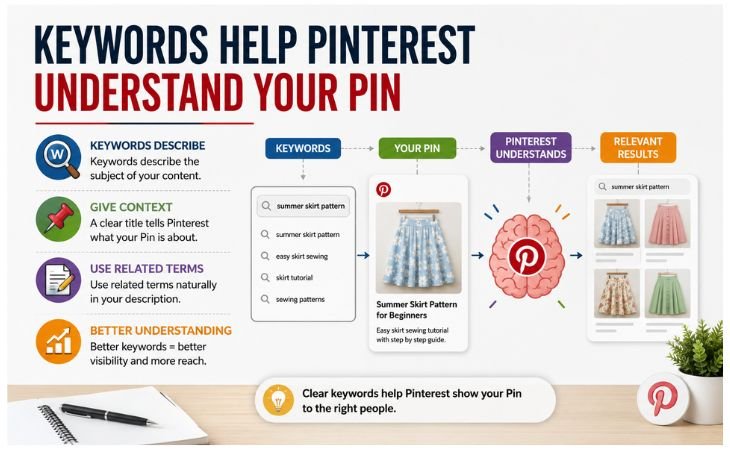
How Pinterest Search Algorithm Works is closely connected with keywords.
Keywords describe the subject of your content.
Imagine you publish a Pin about summer skirt patterns.
A title such as Summer Skirt Pattern for Beginners gives Pinterest much more context than a title such as Beautiful Skirt.
The first title explains what the content actually offers.
You can also use related terms naturally in your description.
These may include sewing pattern. Easy skirt tutorial. Summer sewing ideas. Beginner sewing project.
Use your main keyword only where it fits naturally instead of adding it again and again.
Clear context is more useful than keyword stuffing.
Search Intent Connects Content With People
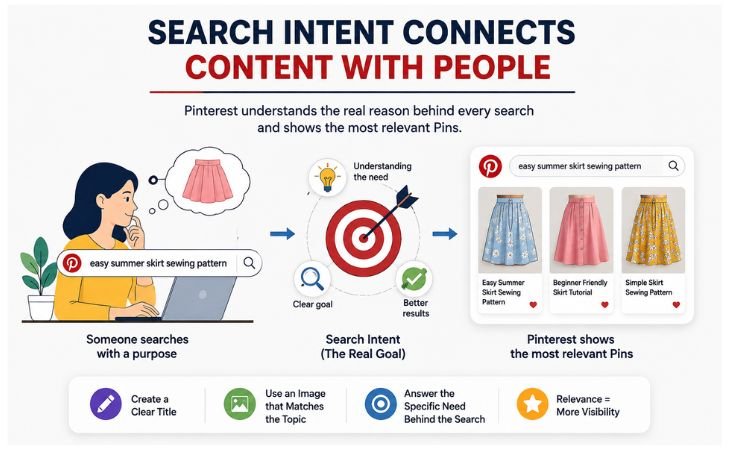
How Pinterest Search Algorithm Works also depends on Search Intent.
Search Intent means understanding what someone hopes to find.
A person searching for skirt may only be exploring ideas.
Someone searching for easy summer skirt sewing pattern has a clearer goal.
That difference matters.
Your Pin should answer the specific need behind the search.
Create a clear title.
Use an image that matches the topic.
Write a useful description.
Then send the visitor to a page that provides what the Pin promised.
People are more likely to find the visit useful when the page delivers exactly what they expected.
Pinterest Looks at Pin Relevance
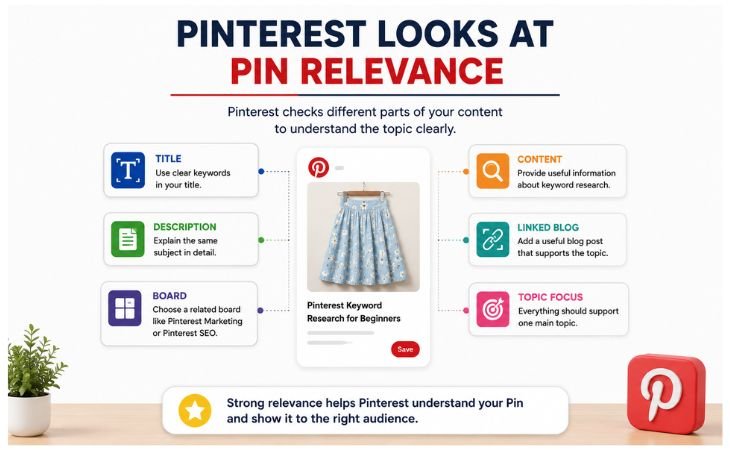
How Pinterest Search Algorithm Works involves relevance between different parts of your content.
Pinterest needs clear signals about the subject of a Pin.
Your title may say Pinterest Keyword Research for Beginners.
Your description should discuss the same subject.
The Board should also be related to Pinterest Marketing or Pinterest SEO.
Your linked blog should then provide useful information about keyword research.
Everything supports one topic.
This makes the content easier to understand.
Avoid using unrelated popular keywords simply because they receive searches.
Relevance should always come first.
Pin Quality Can Support Better Performance
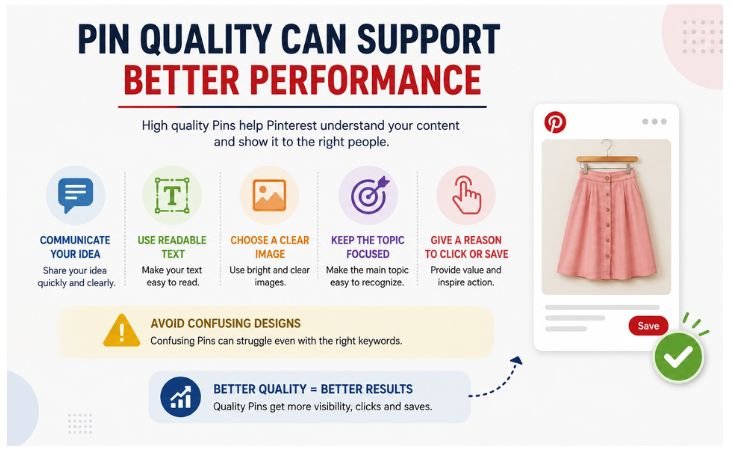
How Pinterest Search Algorithm Works is not only about adding keywords.
The quality of the Pin matters too.
A useful Pin should communicate its idea quickly.
Use readable text.
Choose a clear image.
Make the main topic easy to recognize.
Give people a real reason to click or save the Pin.
A confusing design may struggle even when the keywords are good.
A professional Pin and strong Pinterest SEO work better together.
The goal is to help people understand the value of your content within a few seconds.
User Engagement Gives Pinterest Useful Signals
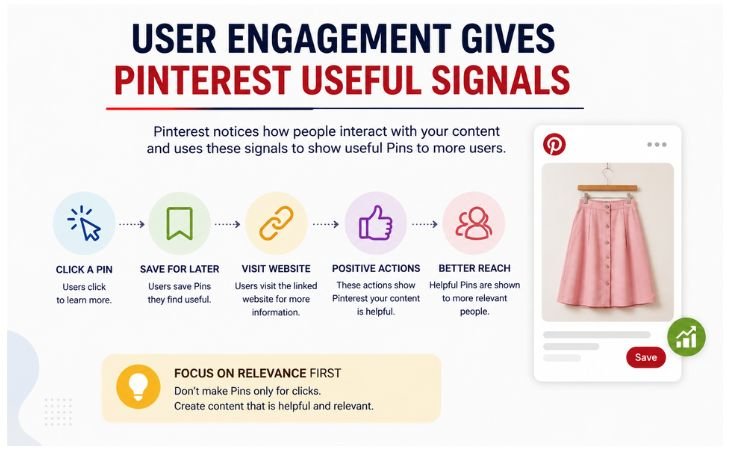
How Pinterest Search Algorithm Works can also be influenced by how people interact with content.
Users may click a Pin.
They may save it for later.
They may visit the linked website.
These actions can provide useful information about how people respond to the content.
But do not create Pins only to chase clicks.
Focus on relevance first.
A smaller number of interested visitors can be more valuable than many people who leave immediately.
Create Pins for the audience that genuinely needs your content.
Boards Give Your Pins More Context
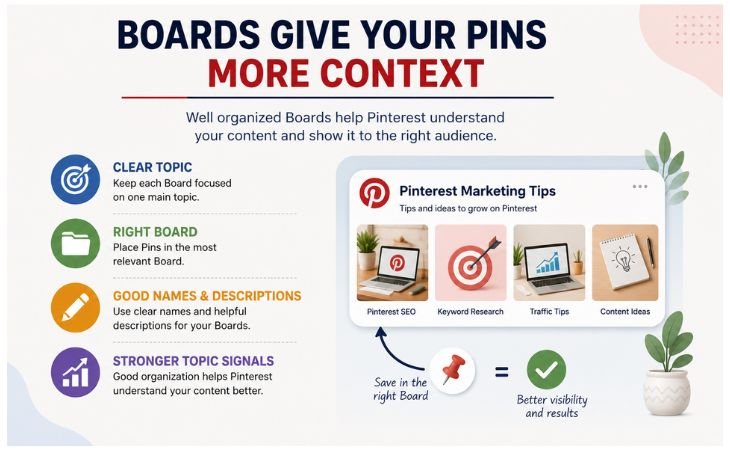
How Pinterest Search Algorithm Works also makes Board organization important.
A Board should have a clear topic.
For example a Pin about Pinterest SEO fits naturally inside a Board called Pinterest Marketing Tips.
A sewing pattern belongs in a Board related to Sewing Patterns or Sewing Tutorials.
Use clear Board names.
Write useful Board descriptions.
Save Pins where they logically belong.
Good organization helps create stronger topic signals across your Pinterest account.
It also makes your profile easier for people to explore.
Fresh Content Can Create New Opportunities
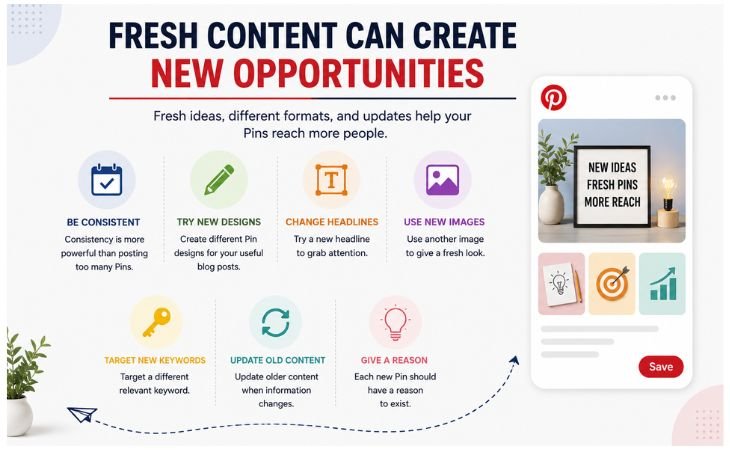
How Pinterest Search Algorithm Works does not mean you need to publish dozens of Pins every day.
Consistency is more useful than filling your account with repetitive content.
You can create different Pin designs for useful blog posts.
Try a new headline.
Use another image.
Target a different relevant keyword.
You can also update older content when information changes.
Each new Pin should have a reason to exist.
Quality should remain the priority.
Pinterest SEO Continues on Your Website

How Pinterest Search Algorithm Works should not stop at Pinterest.
Your destination page matters for the complete user journey.
If your Pin promises a Pinterest SEO guide then the linked page should provide that guide.
Use a clear blog title.
Write helpful content.
Optimize your images.
Create a useful Meta Title and Meta Description.
Keep the page easy to read.
This creates consistency between your Pin and website.
It can also support your wider SEO strategy.
Common Pinterest Algorithm Mistakes
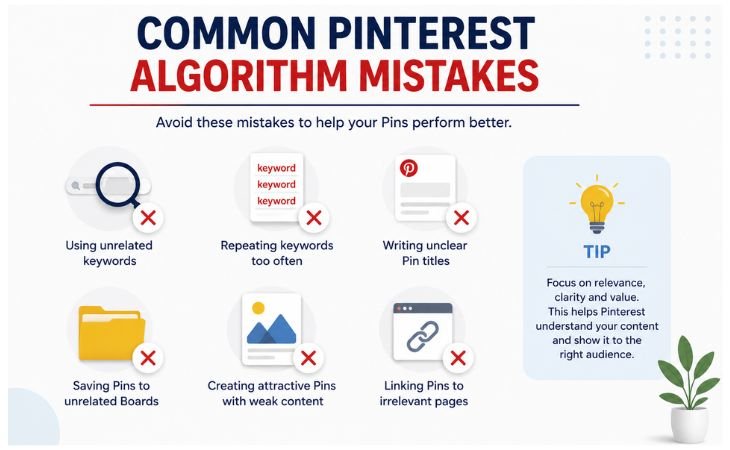
How Pinterest Search Algorithm Works becomes more useful when you know what to avoid.
Common mistakes include
. Using unrelated keywords
. Repeating keywords too often
. Writing unclear Pin titles
. Saving Pins to unrelated Boards
. Creating attractive Pins with weak content
. Linking Pins to irrelevant pages
. Ignoring Search Intent
. Publishing many similar Pins without adding value
Avoiding these mistakes can make your Pinterest strategy cleaner and more focused.
Best Way to Work With the Pinterest Algorithm
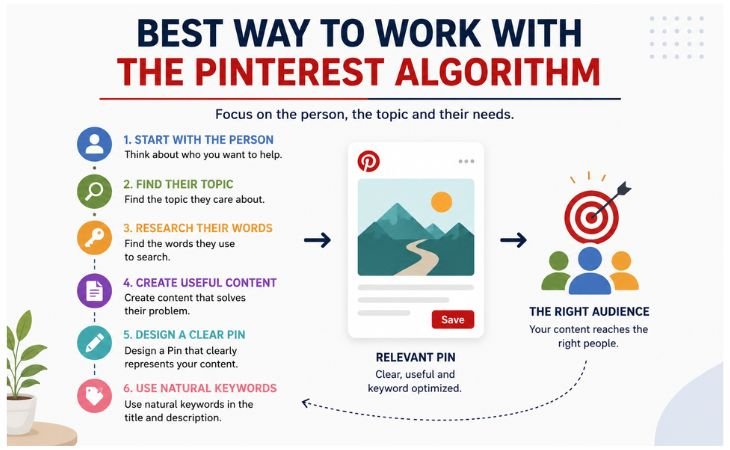
How Pinterest Search Algorithm Works should guide your strategy rather than make it complicated.
Start with the person searching.
Find a topic they care about.
Research the words they use.
Create useful content around that need.
Design a Pin that clearly represents the content.
Use a natural keyword in the title and description.
Save it to the most relevant Board.
Link it to a useful page.
Then review your Pinterest Analytics over time.
See which topics attract attention.
Learn from the results.
Improve future Pins based on real performance.
Final Thoughts

How Pinterest Search Algorithm Works is easier to understand when you stop thinking about tricks.
Pinterest wants to connect people with useful ideas.
Keywords help explain your topic.
Search Intent helps you understand the audience.
Relevant Boards provide context.
Strong Pin design attracts attention.
Useful website content completes the journey.
You do not need to fight the Pinterest algorithm.
Make your content easy to understand and genuinely useful.
That is a much stronger foundation for Pinterest SEO and long term website traffic.
Ready to Grow with Pinterest?
Want to improve your Pinterest strategy and bring more visitors to your website?
Explore my Pinterest Marketing Services for professional support. You can also follow my Pinterest Account for fresh Pins and practical Pinterest Marketing ideas.
Learn more. Apply the strategy. Keep growing.