JUKI Sewing Machine is one of the most trusted industrial sewing machine brands for professional tailors, fashion designers, and garment businesses around the world.
In 2026, JUKI continues to dominate the market with high-speed, durable, and precision-engineered machines designed to improve productivity and sewing quality.
Whether you run a tailoring shop, manage a garment production unit, or specialize in clothing alterations, JUKI offers reliable solutions for every level of professional sewing.
Known for their smooth operation, low maintenance requirements, and long-lasting performance, JUKI sewing machines help tailors handle daily workloads with greater efficiency and accuracy.
Their reputation for quality and innovation has made them a preferred choice for tailoring businesses worldwide.
In this guide, we will explore the Top 5 JUKI Sewing Machines for Professional Tailors in 2026, compare their key features,
and help you choose the right model for your tailoring needs and business goals.
JUKI Sewing Machine Importance in the Market
JUKI Sewing Machine is widely recognized as one of the most trusted brands in the global tailoring and garment industry.
Over the years, JUKI has built a strong reputation for producing reliable, high-performance sewing machines that meet the demands of professional tailors, fashion designers,
and boutique owners.
One of the main reasons behind the popularity of a JUKI Sewing Machine is the level of trust it has earned among industry professionals. T
ailors around the world depend on JUKI machines for their durability, stitching accuracy, and consistent performance during long working hours.
In the modern apparel industry, a JUKI Sewing Machine is often considered an industrial standard because of its advanced technology, smooth operation, and ability to handle both small
and large-scale sewing projects efficiently.
Many garment factories and professional tailoring workshops use JUKI machines as part of their daily production process.
Today, JUKI Sewing Machine models are used in countries across Asia, Europe, the Middle East, and North America.
Their global presence reflects the brand’s commitment to quality, innovation, and professional sewing excellence, making JUKI a preferred choice for serious sewing professionals worldwide.
Why Professional Tailors Prefer JUKI Sewing Machines
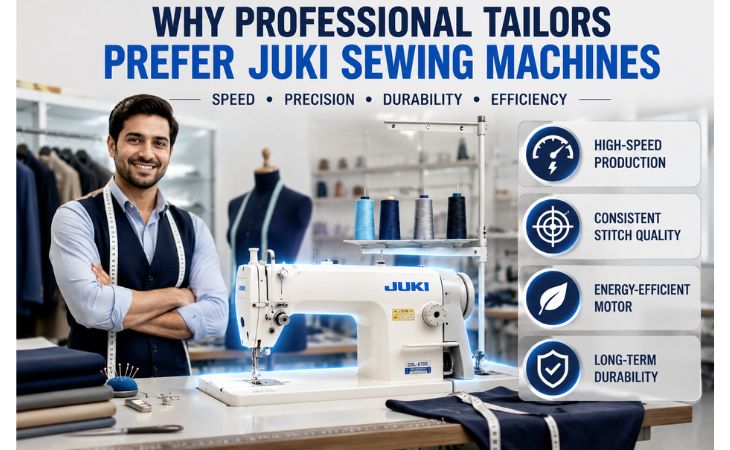
JUKI Sewing Machine is a preferred choice among professional tailors because it combines speed, precision, durability, and efficiency in one reliable package.
Whether you operate a tailoring shop, fashion studio, or garment production unit, JUKI machines are designed to handle demanding workloads while maintaining consistent sewing quality.
High-Speed Production
JUKI Sewing Machine models are known for their high-speed production capabilities, making them ideal for busy tailoring businesses and garment manufacturers.
Faster stitching speeds help professionals complete more orders in less time, improving productivity without compromising stitch quality.
Consistent Stitch Quality
JUKI Sewing Machine technology is engineered to deliver clean, accurate, and consistent stitches across different fabrics.
From clothing alterations to custom tailoring and fashion design projects, JUKI machines help maintain professional-quality results throughout the production process.
Energy-Efficient Servo Motors
JUKI Sewing Machine models equipped with servo motors consume less electricity than traditional clutch motor machines.
These energy-efficient motors operate quietly, provide better speed control, and help reduce long-term operating costs for tailoring workshops and sewing businesses.
Long-Term Durability
JUKI Sewing Machine equipment is built with high-quality industrial components designed for daily professional use.
With proper maintenance, these machines can deliver reliable performance for many years, making them a valuable investment for serious sewing professionals.
Low Maintenance Cost
JUKI Sewing Machine systems are widely appreciated for their dependable construction and low maintenance requirements.
Fewer repairs and reduced downtime allow tailoring businesses to focus on production, customer satisfaction, and business growth rather than equipment issues.
Professional tailors continue to choose JUKI Sewing Machine models because they offer the perfect balance of speed, stitching precision, energy efficiency, durability,
and long-term value for modern tailoring operations.
Top 5 JUKI Sewing Machines for Professional Tailors in 2026
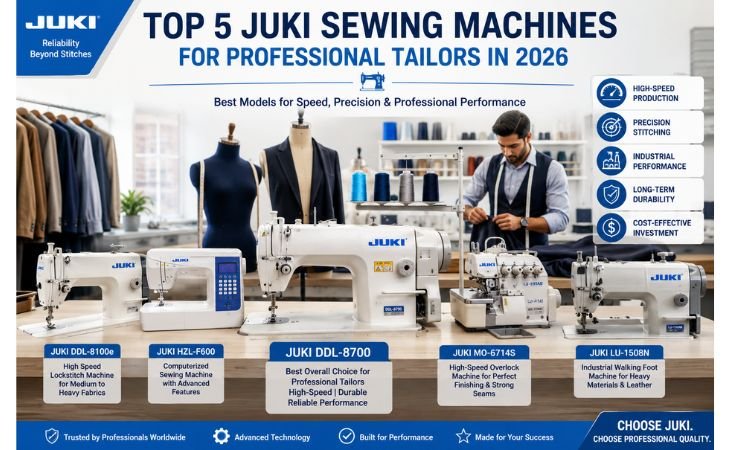
JUKI Sewing Machine models are trusted by professional tailors, fashion designers, and garment manufacturers for their speed, durability, and stitching precision.
Whether you operate a tailoring shop, manage a boutique, or run a garment production business, choosing the right JUKI machine can improve productivity and deliver professional-quality results.
Below are five of the best JUKI sewing machines for professional use in 2026.
JUKI DDL-8700
Best For: Professional tailoring shops, garment production, and daily sewing operations.
Key Features:
. High-speed industrial lockstitch machine
. Smooth and quiet operation
. Consistent stitch quality
. Reliable performance for long working hours
Pros:
. Excellent stitching precision
. Durable industrial construction
. Suitable for high-volume sewing
. Widely used in professional tailoring businesses
Cons:
. Not ideal for heavy-duty materials
. Requires some experience for beginners
JUKI DDL-8100e
Best For: Tailors seeking an energy-efficient industrial sewing machine.
Key Features:
. Built-in energy-saving servo motor
. Reduced power consumption
. Quiet operation
. Improved speed control
Pros:
. Lower electricity costs
. Easy to operate
. Reliable stitch consistency
. Ideal for small and medium tailoring workshops
Cons:
. Higher initial investment than basic models
. Limited for specialized heavy-duty applications
JUKI HZL-F600
Best For: Fashion designers, custom tailoring, and creative sewing projects.
Key Features:
. Computerized sewing system
. Multiple stitch patterns
. Automatic thread cutting
. Advanced sewing functions
Pros:
. Versatile sewing options
. User-friendly controls
. Suitable for decorative stitching
. Excellent for fashion design work
Cons:
. Not designed for industrial production
. More expensive than entry-level domestic machines
JUKI MO-6714S
Best For: Garment factories, overlocking, and professional finishing work.
Key Features:
. Industrial overlock sewing machine
. High-speed operation
. Clean edge finishing
. Professional garment construction
Pros:
. Produces strong and clean seams
. Ideal for garment production
. Reliable industrial performance
. Excellent finishing quality
Cons:
. Specialized machine with limited functions
. Requires additional machines for complete garment construction
JUKI LU-1508N
Best For: Heavy-duty sewing, upholstery, leatherwork, and thick fabrics.
Key Features:
. Walking foot mechanism
. Powerful feeding system
. Designed for heavy materials
. Industrial-grade durability
Pros:
. Handles leather and thick fabrics with ease
. Strong and consistent stitching
. Built for demanding workloads
. Long-term reliability
Cons:
. Higher purchase cost
. Larger size requires dedicated workspace
JUKI Sewing Machine models continue to set the standard for professional sewing equipment in 2026.
From high-speed garment production to heavy-duty leatherwork and creative fashion design, these machines offer reliable solutions for a wide range of tailoring and sewing applications.
How to Choose the Right JUKI Sewing Machine
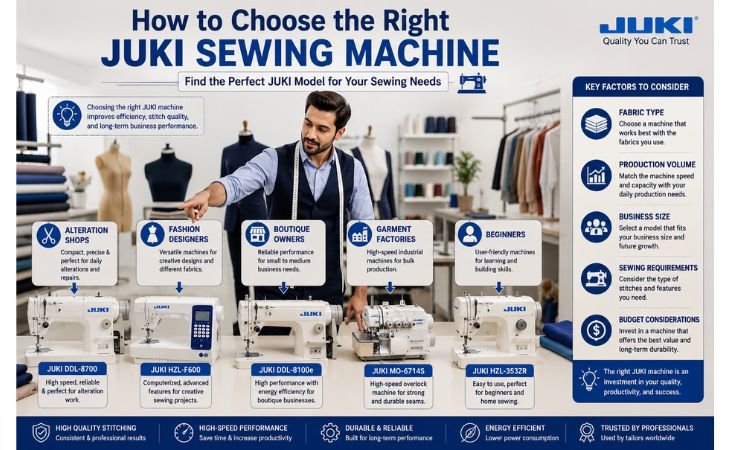
JUKI Sewing Machine models are available in different types, each designed for specific sewing needs and production requirements.
Choosing the right machine depends on the type of work you do, the fabrics you handle, and the volume of garments you produce.
Understanding your business needs can help you invest in a sewing machine that improves efficiency, productivity, and long-term performance.
For Alteration Shops
JUKI Sewing Machine models such as the DDL-8700 are ideal for alteration shops that handle daily repairs, adjustments, and custom fitting services.
These machines offer reliable stitch quality, smooth operation, and the flexibility needed for working with a variety of fabrics.
For Fashion Designers
JUKI Sewing Machine options like the HZL-F600 are well suited for fashion designers who require creative stitching capabilities and advanced sewing features.
With multiple stitch patterns and precision controls, these machines support custom garment creation and fashion design projects.
For Boutique Owners
JUKI Sewing Machine solutions provide boutique owners with the speed, durability, and professional results needed to produce high-quality garments.
A dependable industrial sewing machine can help maintain consistent workmanship while meeting customer demands efficiently.
For Garment Factories
JUKI Sewing Machine equipment is widely used in garment factories because of its high-speed production capabilities and long-term reliability.
Industrial models such as the DDL-8700 and MO-6714S are designed to handle large production volumes while maintaining consistent stitching performance.
For Beginners
JUKI Sewing Machine models with user-friendly controls and energy-efficient servo motors are excellent choices for beginners who want to develop professional sewing skills.
Choosing a machine that is easy to operate and maintain can make the learning process more enjoyable and productive.
Selecting the right JUKI Sewing Machine depends on your sewing goals, budget, and workload.
Whether you are a beginner, professional tailor, fashion designer, or garment manufacturer, investing in the right machine can improve sewing quality, increase productivity,
and support long-term business growth.
JUKI Sewing Machine vs Other Popular Brands
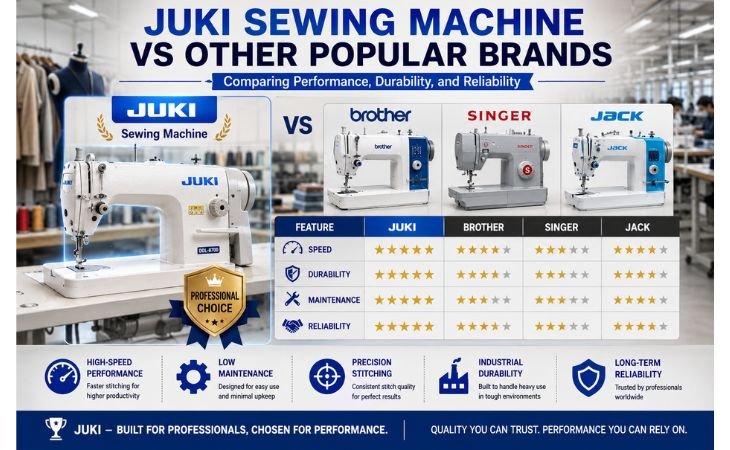
JUKI Sewing Machine is often compared with other well-known sewing machine brands such as Brother, Singer, and Jack.
While each brand offers reliable products for different sewing needs, JUKI has built a strong reputation among professional tailors, garment manufacturers,
and fashion businesses for its industrial-grade performance, durability, and stitching precision.
When choosing between sewing machine brands, it is important to compare factors such as speed, durability, maintenance requirements, price, and long-term reliability.
The table below highlights the key differences between some of the most popular sewing machine brands in the market.
| Feature | JUKI | Brother | Singer | Jack |
|---|---|---|---|---|
| Speed | Excellent | Good | Moderate | Excellent |
| Durability | Excellent | Good | Good | Very Good |
| Maintenance | Low | Moderate | Moderate | Low |
| Price | Higher | Moderate | Affordable | Competitive |
| Reliability | Excellent | Good | Good | Very Good |
Speed
JUKI Sewing Machine models are known for their high-speed stitching capabilities, making them a preferred choice for professional tailoring shops and garment production environments.
Brother and Jack also offer fast machines, while Singer focuses more on domestic and light commercial use.
Durability
JUKI Sewing Machine products are designed for long-term industrial use and can handle demanding workloads for many years.
Their durable construction makes them a trusted investment for professional sewing businesses.
Maintenance
JUKI Sewing Machine systems are generally recognized for their dependable engineering and lower maintenance requirements.
Proper servicing and routine care help maintain consistent performance while reducing downtime.
Price
JUKI Sewing Machine models typically cost more than entry-level sewing machines, but many professionals consider the higher price justified because of their reliability, productivity,
and long-term value.
Budget-conscious buyers may find Brother, Singer, or Jack models more affordable.
Reliability
JUKI Sewing Machine equipment has earned a reputation for reliability in tailoring workshops, garment factories, and fashion production units worldwide.
Consistent stitching quality and dependable performance are among the main reasons why many professionals continue to choose JUKI.
Overall, a JUKI Sewing Machine remains one of the best options for professional tailors who prioritize speed, durability, reliability, and industrial-grade performance.
While Brother, Singer, and Jack each have their strengths, JUKI continues to be a leading choice for serious sewing professionals in 2026.
Common Mistakes When Buying a JUKI Sewing Machine
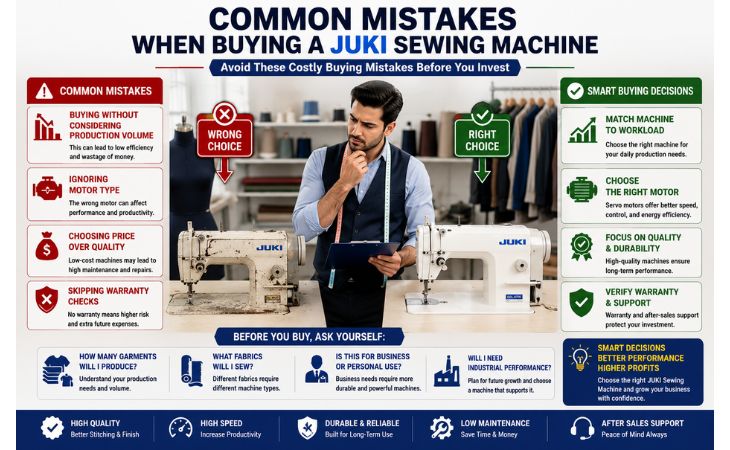
JUKI Sewing Machine models are known for their quality, durability, and professional performance.
However, many buyers make costly mistakes when selecting a machine that does not match their sewing needs or business requirements.
Understanding these common mistakes can help you make a smarter investment and get the best value from your sewing equipment.
Buying Without Considering Production Volume
JUKI Sewing Machine selection should always be based on your expected production volume.
Many buyers purchase a machine without considering how often it will be used.
A tailoring shop that handles dozens of garments each week requires a different machine than a home-based sewing business.
Choosing the wrong machine can limit productivity and affect long-term efficiency.
Ignoring Motor Type
JUKI Sewing Machine models are available with different motor options, including traditional clutch motors and modern servo motors.
Ignoring motor type is a common mistake because the motor directly affects energy consumption, noise levels, speed control, and operating costs.
For most professional tailors, servo motor machines offer better efficiency and a more comfortable working experience.
Choosing Price Over Quality
JUKI Sewing Machine buyers sometimes focus only on the purchase price instead of overall quality and long-term value.
While cheaper machines may seem attractive initially, they often result in higher maintenance costs, reduced durability, and inconsistent stitching performance.
Investing in a reliable machine can save money and improve productivity over time.
Skipping Warranty Checks
JUKI Sewing Machine purchases should always include a review of warranty coverage and after-sales support. Many buyers overlook warranty details and later face unexpected repair expenses.
A strong warranty and access to reliable service support provide additional peace of mind and help protect your investment.
Before purchasing a JUKI Sewing Machine, take time to evaluate your production needs, motor preferences, quality requirements, and warranty options.
Avoiding these common mistakes will help you choose a machine that delivers reliable performance, professional stitch quality, and long-term value for your tailoring business.
Is a JUKI Sewing Machine Worth It in 2026?
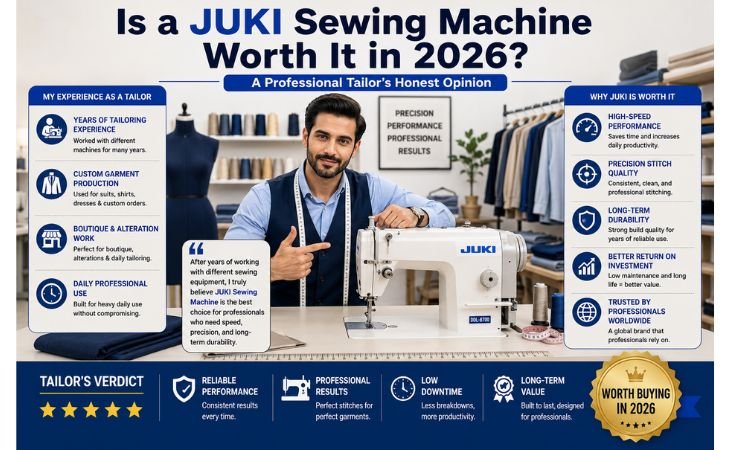
JUKI Sewing Machine continues to be one of the best investments for professional tailors, fashion designers, boutique owners, and garment manufacturers in 2026.
With its reputation for high-speed performance, stitching precision, long-term durability, and reliable operation, JUKI remains a leading choice in the professional sewing industry.
As a tailor, I believe JUKI Sewing Machine remains one of the most reliable sewing machine brands for professionals who need speed, precision, and long-term durability.
After years of working with different sewing equipment, I have seen how the right machine can improve productivity, reduce downtime,
and maintain consistent stitch quality across a wide range of sewing projects.
One of the biggest advantages of a JUKI Sewing Machine is its ability to handle demanding workloads while delivering professional results.
Whether you are performing clothing alterations, creating custom garments, managing a tailoring shop, or operating a garment production unit, JUKI machines are designed to support daily professional use.
Another reason many sewing professionals prefer JUKI Sewing Machine models is their excellent balance of reliability, efficiency, and long-term value.
While the initial investment may be higher than some competing brands, the durability, lower maintenance requirements,
and consistent performance often make JUKI a cost-effective choice over time.
For anyone looking to invest in professional sewing equipment, a JUKI Sewing Machine is well worth considering in 2026.
Its proven track record, advanced technology, and trusted reputation make it a smart choice for those who want dependable performance and high-quality stitching for years to come.
Final Verdict
✔ Excellent for professional tailors
✔ Trusted by garment manufacturers worldwide
✔ High-speed and precision stitching
✔ Durable construction for long-term use
✔ Strong return on investment
✔ Reliable performance for daily production
Overall, a JUKI Sewing Machine is worth the investment for sewing professionals who value quality, productivity, and long-term business growth.
Frequently Asked Questions
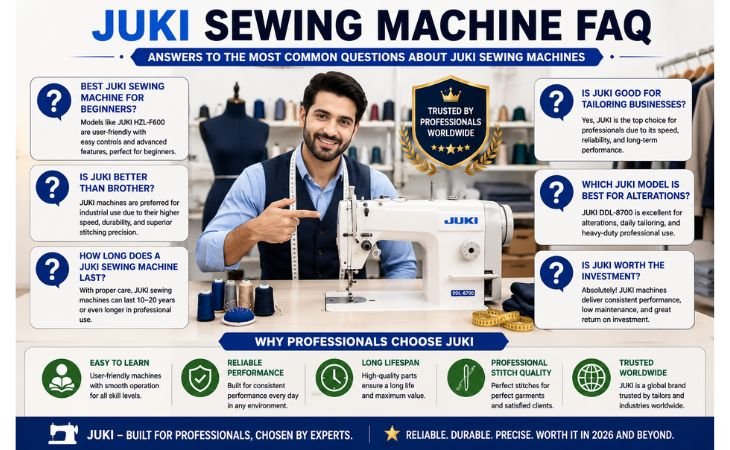
Which JUKI Sewing Machine Is Best for Beginners?
JUKI Sewing Machine models such as the JUKI HZL-F600 are excellent choices for beginners who want a user-friendly machine with advanced features.
It offers multiple stitch options, easy controls, and reliable performance, making it suitable for learning professional sewing techniques.
Is JUKI Better Than Brother?
JUKI Sewing Machine models are generally preferred for industrial sewing, garment production, and professional tailoring because of their durability, speed, and stitching precision.
Brother machines are also reliable but are often more popular among home users, hobbyists, and small-scale sewing projects.
How Long Does a JUKI Sewing Machine Last?
JUKI Sewing Machine products are built for long-term use and can last many years with proper maintenance.
Industrial JUKI machines used in tailoring shops and garment factories often remain in service for a decade or more while maintaining consistent performance and stitch quality.
Is JUKI Good for Tailoring Businesses?
JUKI Sewing Machine equipment is widely used by professional tailors, boutique owners, and garment manufacturers around the world.
Its combination of speed, reliability, durability, and low maintenance requirements makes it an excellent investment for tailoring businesses of all sizes.
Which JUKI Model Is Best for Alterations?
JUKI Sewing Machine models such as the JUKI DDL-8700 are highly recommended for alteration work because they provide smooth operation, consistent stitching,
and reliable performance across different fabric types.
They are commonly used in tailoring shops that specialize in clothing repairs and garment adjustments.
Final FAQ Summary
JUKI Sewing Machine remains one of the most trusted choices for professional sewing in 2026.
Whether you are a beginner, a fashion designer, a tailor, or a garment manufacturer, JUKI offers reliable machines that deliver excellent stitching quality, productivity, and long-term value.
Conclusion
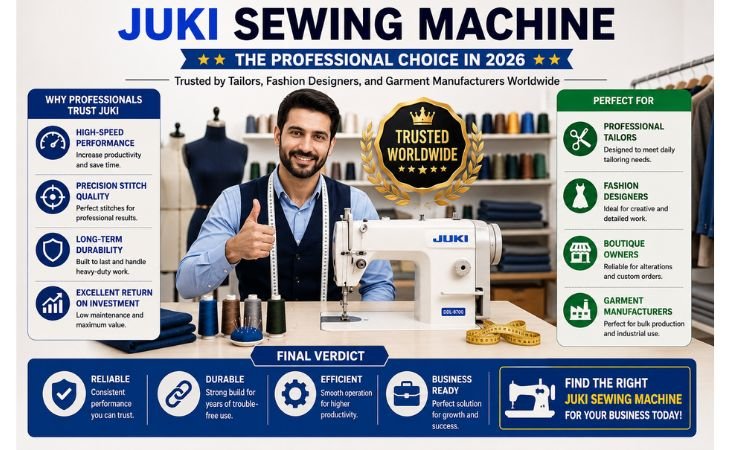
JUKI Sewing Machine continues to be one of the most trusted and reliable choices for professional tailors, fashion designers, boutique owners, and garment manufacturers in 2026.
Known for its high-speed performance, precision stitching, durability, and long-term reliability, JUKI has earned a strong reputation in the global sewing industry.
Throughout this guide, we have explored some of the best JUKI sewing machine models, their key features, advantages, and ideal applications.
From daily alteration work to large-scale garment production, JUKI offers solutions that meet the needs of both small businesses and professional sewing operations.
Whether you are looking for an industrial sewing machine for a tailoring shop, a versatile machine for fashion design projects, or a durable solution for garment manufacturing,
JUKI provides dependable performance and excellent long-term value.
Whether you are a professional tailor, fashion designer, or boutique owner, investing in the right JUKI Sewing Machine can improve productivity, stitch quality, and long-term business performance.
By choosing a model that matches your sewing needs and production goals, you can build a more efficient, reliable, and profitable sewing operation.
If you are ready to upgrade your sewing equipment, now is the perfect time to explore the best JUKI sewing machines and find the model that fits your business requirements.
Explore the recommended JUKI sewing machines below and check their latest features, pricing, and availability on Amazon.